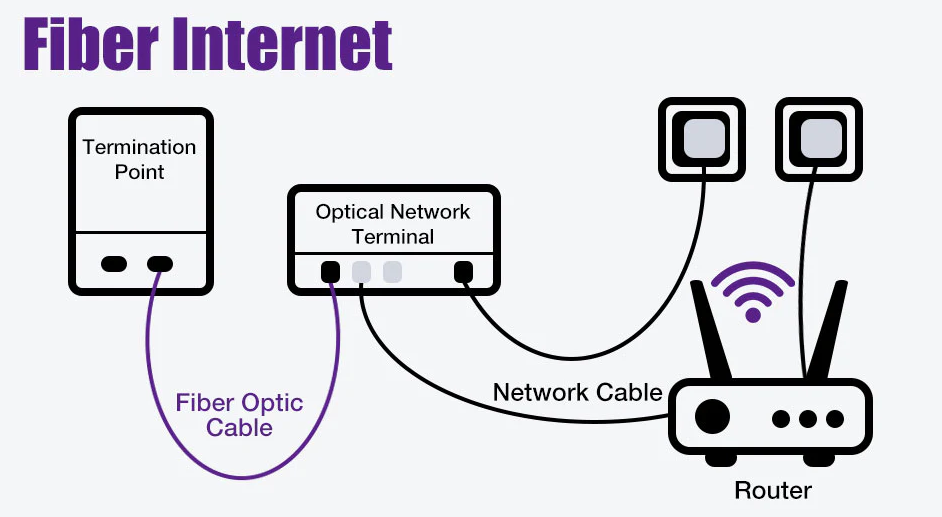
The distinctions between fiber, DSL, and cable internet are crucial for consumers seeking optimal connectivity. Each type of internet service exhibits unique characteristics in terms of speed, reliability, and cost. Fiber internet stands out for its rapid data transmission capabilities, while DSL offers a more economical yet slower alternative. Cable internet, though fast, may struggle with bandwidth during peak usage. Understanding these differences will inform users’ choices, but what factors should they prioritize?
Understanding Fiber Internet
Fiber internet represents a significant advancement in broadband technology, utilizing strands of glass or plastic to transmit data as pulses of light.
The fiber advantages include superior speed, reliability, and bandwidth capacity, enabling multiple devices to connect simultaneously without degradation.
However, fiber disadvantages comprise higher installation costs and limited availability in rural areas, potentially restricting access to this advanced connectivity for some users.
Exploring DSL Internet
DSL (Digital Subscriber Line) internet serves as a widely accessible alternative to fiber and cable connections, utilizing existing telephone lines to deliver broadband service.
DSL advantages include affordability and widespread availability, making it suitable for many users.
However, DSL limitations manifest in lower speeds and performance fluctuations, particularly over longer distances, which can impact user experience and the ability to support demanding applications.
See also: Data Visualization Techniques
Analyzing Cable Internet
As users increasingly demand high-speed internet for streaming, gaming, and telecommuting, cable internet emerges as a robust solution, leveraging coaxial cable infrastructure to deliver broadband service.
However, it is essential to consider bandwidth limitations, as shared connections can lead to reduced speeds during peak usage times.
Understanding these dynamics allows consumers to make informed decisions regarding their internet service options.
Comparing Speeds, Reliability, and Costs
How do the speed, reliability, and costs of different internet types stack up against each other?
A speed comparison reveals fiber as superior, offering symmetrical upload and download rates, while DSL and cable lag.
Reliability favors fiber as well, with minimal downtime.
Cost analysis shows DSL typically cheaper, while fiber’s higher price reflects superior performance, making it a worthwhile investment for high-demand users.
Conclusion
In the modern digital landscape, the choice between fiber, DSL, and cable internet mirrors the classic tale of the tortoise and the hare. Fiber emerges as the swift champion, ideal for those demanding speed and reliability, while DSL offers a budget-friendly alternative, albeit at a slower pace. Cable internet stands as a middle ground, with potential for congestion during peak hours. Ultimately, users must weigh their specific needs and financial considerations to select the most suitable option for their online endeavors.